
Right-of-Way Clearing Services in Austin, TX
Right-of-way clearing services help create safe, accessible corridors for transportation, utilities, pipelines, trails, and infrastructure projects. GT Site Services provides professional right-of-way clearing in Austin, TX and throughout Central Texas using specialized equipment and proven vegetation management techniques.
Our team removes brush, trees, undergrowth, stumps, and other obstacles while minimizing disruption to the surrounding environment. Whether your project requires utility corridor maintenance, access road clearing, or infrastructure preparation, we have the experience and equipment to complete the work efficiently and safely.
What Is Right-of-Way Clearing?
Right-of-way clearing is the process of removing vegetation and obstructions from designated access corridors to improve safety, accessibility, and operational efficiency. These corridors are commonly used for transportation routes, utility lines, pipelines, access roads, and other infrastructure projects.
Common right-of-way clearing applications include:
- utility corridor maintenance
- power line clearing
- pipeline clearing
- access road clearing
- trail clearing
- transmission line maintenance
- infrastructure development
- vegetation management

Right of way land clearing – Bastrop, TX
Benefits of Right-of-Way Clearing
- Reduced vegetation and obstruction
- Improved access and visibility
- Reduced soil disturbance
- Minimized erosion and runoff
- Less debris handling
- Easier corridor maintenance
- More manageable infrastructure access
Our experienced team specializes in efficient and environmentally friendly land clearing techniques. We employ state-of-the-art equipment, to ensure the highest level of precision and effectiveness in our work.
Using Forestry Mulching Machines, we are able to grind and mulch vegetation into nutrient-rich organic matter, benefiting the soil and ecosystem. This method not only clears the land but also promotes healthy growth and reduces the risk of erosion.
Common Right-of-Way Problems We Solve
Right-of-way corridors can become difficult to access or maintain when vegetation and other obstructions grow into the designated area. Clearing can help address:
- Dense brush and overgrowth
- Trees and undergrowth within access corridors
- Stumps and other ground-level obstructions
- Overgrown utility corridors
- Vegetation along pipelines and access roads
- Blocked trails and infrastructure routes
- Reduced visibility along corridors
- Vegetation interfering with planned infrastructure work

Right of way Land Clearing Trail – Wimberley, Texas
Right-of-Way Clearing Services
GT Site Services & Land Clearing removes vegetation and other obstructions from designated corridors based on the property’s terrain, vegetation density, access, and project requirements. Depending on site conditions, different equipment and clearing methods may be used to prepare the corridor for its intended purpose.

Right of way Land Clearing – Blanco, Texas
What Right-of-Way Clearing May Include
Depending on the project, stock tank construction may include:
- Brush and undergrowth removal
- Tree and vegetation clearing
- Stump removal
- Rock and obstruction removal
- Utility corridor clearing
- Pipeline corridor clearing
- Access road clearing
- Trail clearing
- Infrastructure site preparation
- Vegetation management
Typical Right-of-Way Clearing Timeline
Site Assessment & Planning
We evaluate the corridor, terrain, vegetation density, access, existing obstructions, and project requirements.
Clearing & Obstruction Removal
We remove or process suitable vegetation and address applicable stumps, rocks, and other obstructions according to the project plan.
Final Clearing & Review
We complete the required site work and review the cleared corridor to ensure it is prepared for its intended use.
Who Is Right-of-Way Clearing For?
Right-of-way clearing supports infrastructure, access, development, and property management projects across a range of industries.
- utility companies
- pipeline operators
- roadway contractors
- municipalities
- ranch and agricultural properties
- commercial developments
- land developers
- private property owners

Stock Tank Construction – Blanco, Texas
Each project is evaluated individually to determine the most efficient clearing method based on terrain, vegetation density, and project requirements.
Call Us Now On (512) 790-7120 For Your Free Lot and Land Clearing Quote.
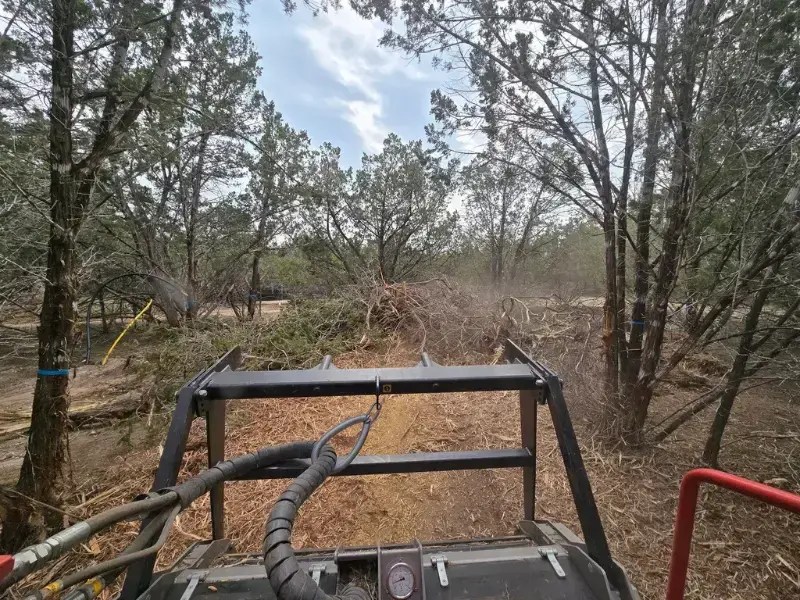

Land Clearing

Land Clearing – Johnson City, Texas
Our team uses excavators and other appropriate equipment to remove stumps, rocks, and other obstructions when required for the right-of-way project, creating a smooth and level surface for your right of way project. We understand the importance of maintaining the integrity of the land while efficiently clearing a path for your specific needs.
Safety is our top priority in every project we undertake. We adhere to rigorous safety standards and follow industry best practices to ensure a secure and controlled clearing process. Our team is fully licensed and insured, providing you with peace of mind and confidence in our services.
Whether you require right of way land clearing for roadways, power lines, pipelines, or any other infrastructure project, we have the expertise and equipment to get the job done right. We pride ourselves on delivering exceptional results while minimizing environmental impact.
Contact us today to discuss your right of way land clearing needs. We are committed to providing professional, reliable, and sustainable solutions that meet your unique requirements. Let us help you clear the path for progress.
Why Choose GT Site Services & Land Clearing?
Based in Buda, TX, GT Site Services & Land Clearing serves property owners throughout Central Texas with land clearing and pre-development services for residential, agricultural, commercial, and development projects. Our range of capabilities includes land clearing, forestry mulching, rock crushing, road construction, culvert installation, mobile home pads, stock tanks, and right-of-way clearing. We evaluate each property based on its terrain, vegetation, access, existing conditions, and intended use to determine an appropriate approach for the project. Our growing equipment capabilities allow us to handle projects of different sizes and scopes, while our growth through referrals and repeat customers reflects the relationships we have built with property owners throughout Central Texas.
How Our Site Preparation Process Works
Every Central Texas property has different terrain, vegetation, access conditions, existing features, and development goals. Our process helps us understand the property and determine an appropriate approach for the work.
Our operators work on projects ranging from residential properties to larger commercial and development sites. We focus on appropriate equipment, efficient site work, and completing projects according to their requirements.
Property Evaluation
We assess the property, terrain, vegetation, access, existing conditions, and project goals to understand the site’s requirements.
Project Planning
We determine the appropriate equipment, clearing methods, and site preparation services based on the property’s conditions and project goals.
Land Clearing & Site Preparation
We complete the required clearing and site preparation work based on the project plan, property conditions, and intended use.
Cleanup & Final Inspection
We complete the necessary cleanup and inspect the finished site to ensure the property is prepared for its next stage.
What Our Clients Say
Right-of-Way Clearing Service Areas
GT Site Services & Land Clearing provides right-of-way clearing and related land preparation services throughout Central Texas. Explore our service area pages to learn more about services available in your location.
Bastrop, TX | Blanco, TX | Buda, TX | Cedar Park, TX | Dale, TX | Dripping Springs, TX | Elgin, TX | Giddings, TX | Georgetown, TX | Hutto, TX | Jonestown, TX | Lakeway, TX | Leander, TX | Liberty Hill, TX | Lockhart, TX | Marble Falls, TX | Martindale, TX | New Braunfels, TX | Round Rock, TX | San Antonio, TX | San Marcos, TX | Smithville, TX | Spicewood, TX | Taylor, TX | Wimberley, TX


Forestry Mulching vs. Traditional Right-of-Way Clearing
| Forestry Mulching | Traditional Right-of-Way Clearing |
|---|---|
| Processes suitable vegetation into mulch on-site | May remove vegetation and haul debris away |
| Well suited for brush, undergrowth, and vegetation management | Can address larger trees, stumps, rocks, and other obstructions |
| Reduces the need for debris piles and hauling | May require additional debris handling and disposal |
| Leaves processed organic material on the ground | Typically removes cleared material from the work area |
| Can help minimize unnecessary soil disturbance | Soil impact varies based on equipment and clearing methods |
| Useful for maintaining vegetation within established corridors | Can be suitable when more extensive obstruction removal is required |
Frequently Asked Questions About Right-of-Way Clearing
Right-of-way clearing helps maintain safe and accessible corridors for utilities, transportation, infrastructure, and property access. Below are answers to common questions about right-of-way clearing services in Austin and Central Texas.
Right-of-way clearing typically includes removing brush, trees, undergrowth, stumps, and other obstructions that may interfere with access, visibility, utility operations, or infrastructure projects.
Common projects include utility corridor maintenance, power line clearing, pipeline routes, access roads, trails, transmission lines, and infrastructure development projects.
Yes. Forestry mulching is commonly used because it efficiently removes vegetation while minimizing soil disturbance and reducing debris disposal requirements.
Yes. Clearing overgrown vegetation can improve access for maintenance vehicles, utility crews, construction equipment, and property owners.
Maintenance frequency depends on vegetation growth, environmental conditions, and project requirements. Many corridors require periodic clearing to maintain safe and reliable access.